VOO vs. SPY: Which Popular S&P 500 ETF Is the Better Buy? Andy Gould, The Motley Fool Sun, June 28, 2026 at 10:23 AM PDT 4 min read VOO SPY ^GSPC The choice between the Vanguard S&P 500 ETF (NYSEMKT:VOO) and the State Street SPDR S&P 500 ETF Trust (NYSEMKT:SPY) often comes down to cost for long-term investors. Both funds serve as foundational building blocks, providing exposure to the 500 largest U.S. companies. While they track the same underlying index, structural differences and expense ratios can influence total returns for those holding these ETFs over several decades. Snapshot (cost & size) Metric SPY VOO Issuer State Street Vanguard Expense ratio 0.09% 0.03% 1-year return (as of June 26, 2026) 20.46% 20.59% Dividend yield 0.98% 1.03% Beta 1.00 1.00 AUM $783.8 billion $1.7 trillion Beta measures price volatility relative to the S&P 500; beta is calculated from five-year monthly returns. The 1-year return represents total return over the trailing 12 months. Dividend yield is the trailing-12-month distribution yield. VOO is the cheaper option, carrying an expense ratio of 0.03% vs. SPY's 0.09%. Both funds offer a dividend yield of roughly 1%. Performance & risk comparison Metric SPY VOO Max drawdown (5 yr) (24.50%) (24.53%) Growth of $1,000 over 5 years (total return) $1,828.00 $1,835.00 What's inside Under the hood, both funds look very similar. Launched in 2010, VOO holds 505 stocks. Its largest positions include Nvidia (NASDAQ:NVDA) at 7.9%, Apple (NASDAQ:AAPL) at 7.0%, and Microsoft (NASDAQ:MSFT) at 5.1%. The ETF's sector weights are concentrated in technology at 39.1%, financial services at 10.9%, and communication services at 10.7%. SPY holds 503 stocks and was launched in 1993 -- making it the oldest U.S.-listed ETF still trading today. Its largest positions include Nvidia at 7.9%, Apple at 7.1%, and Microsoft at 5.1%. Its top sector weights include technology at 39.1%, financial services at 11.1%, and communication services at 10.6%. As a unit investment trust -- a legacy legal structure that predates modern ETF design -- SPY is legally required to hold incoming dividends in a non-interest-bearing cash account until they are distributed quarterly, rather than putting that money back to work immediately. It also cannot engage in securities lending. VOO, as an open-end fund, does both -- reinvesting dividends right away and lending securities for additional income -- giving it a small but structural edge that can compound over time. For more guidance on ETF investing, check out the full guide at this link . What this means for investors At first glance, VOO and SPY look nearly identical -- and for most practical purposes, they are. Both give you broad exposure to the U.S. economy's biggest companies. But "nearly identical" isn't the same as identical, and for long-term investors, the differences are worth understanding. Story Continues The clearest edge belongs to VOO. Its 0.03% expense ratio is one-third the cost of SPY's 0.09% annual fee -- a gap that may seem trivial in any given year but can compound meaningfully over decades....
🔥 EXCLUSIVE PARTNER OFFER
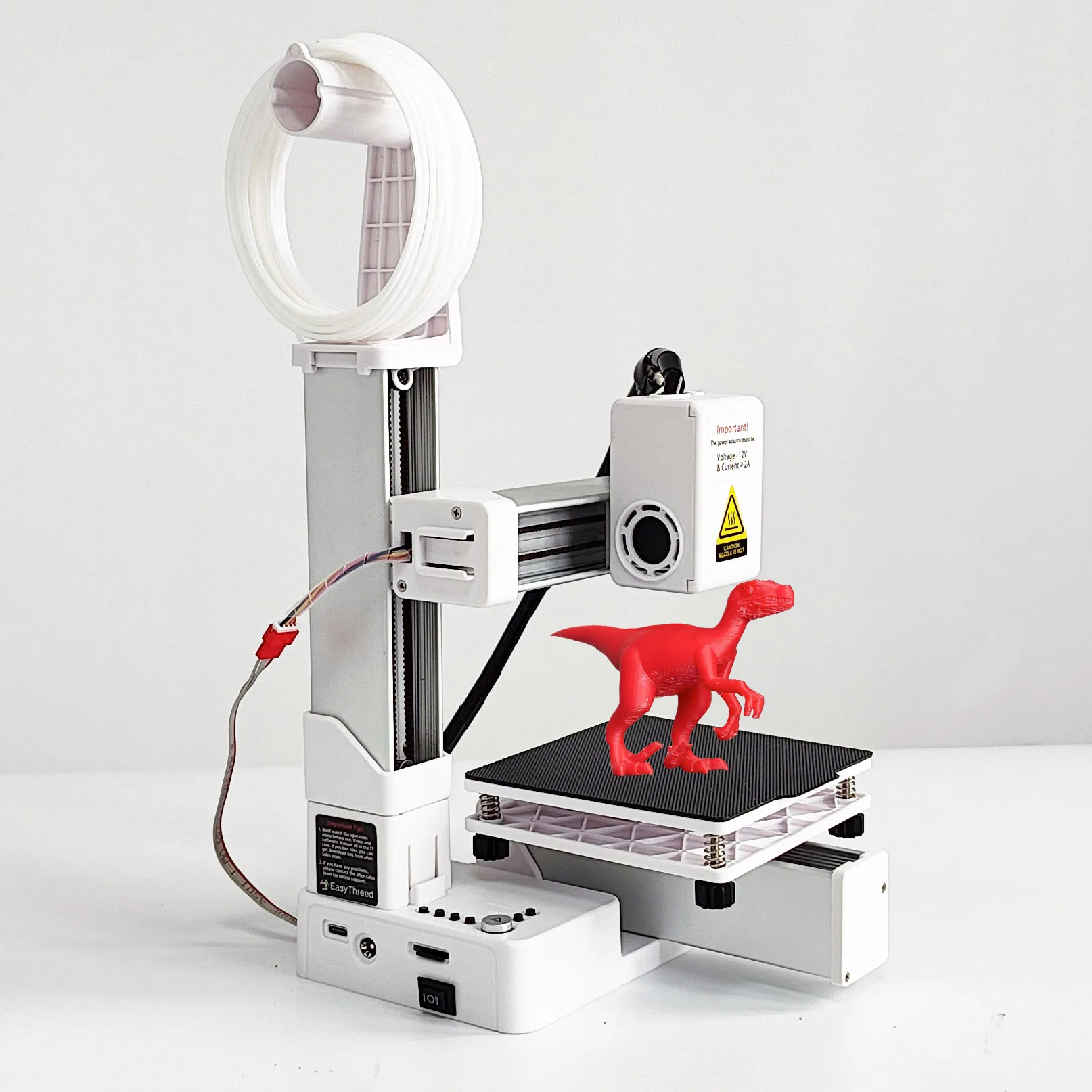
EasyThreed 3D Printer Entry Level Compatible with PLA TPU 1.75mm Filament include Power Adaptor.
Special Price
✨ Special deal alert! Don't miss this amazing product with top-rated reviews worldwide.
Affiliate link — Commission earned at no extra cost to you
© EcoNews DZ — Global Economic & Financial News



Comments
Post a Comment